Irregular
Discover our new collection of irregular stepping stones in natural stone, for paths with an organic and authentic style.
-
Stepping stones
ADRIATICO Quartzite Stepping Stones - Natural Shape
4.8 / 5.0
(5) 5 total reviews
Regular price 25,50€ /piece25,50€ /piece Sale priceUnit price /piece / per -
Stepping stones
Galician Slate Irregular Stepping Stones
4.86 / 5.0
(7) 7 total reviews
Regular price 31,90€ /piece31,90€ /piece Sale priceUnit price /piece / per -
Stepping Stones
Multicolour Slate Stepping Stones
4.5 / 5.0
(6) 6 total reviews
Regular price 27,90€ /piece27,90€ /piece Sale priceUnit price /piece / per -
Stepping stones
NOBLE Quartzite Stepping Stones
Regular price 23,90€ /piece23,90€ /piece Sale priceUnit price /piece / per -
Stepping stones
ADRIATICO Quartzite Stepping Stones - Rounded Shape
4.71 / 5.0
(7) 7 total reviews
Regular price 30,90€ /piece30,90€ /piece Sale priceUnit price /piece / per -
Stepping stones
BLACK SLATE AZUL Slate Stepping Stones
4.6 / 5.0
(10) 10 total reviews
Regular price From 35,70€ /pieceFrom 35,70€ /piece Sale priceUnit price /piece / per -
How to Choose the Right Stepping Stones? Discover Our Tips -
Stepping stone
Galician Slate Giant Stepping Stones
Regular price 39,90€ /piece39,90€ /piece Sale priceUnit price /piece / per -
Upon quotation
-
Stepping stones
SILVERSAND Granite Stepping Stones
Regular price 41,90€ /piece41,90€ /piece Sale priceUnit price /piece / per
EVERYTHING YOU NEED TO KNOW ABOUT IRREGULAR JAPANESE STEPPING STONES
How to choose, lay and maintain irregular stepping stones? Discover our tips for selecting the stone, determining suitable dimensions and creating a durable, attractive garden path.
An irregular stepping stone is a natural stone slab whose shape is not perfectly geometric. Its varied outlines make it possible to create a garden path with a spontaneous look, which blends easily into a planted environment. Unlike rectangular slabs, these stones offer a less linear look and give character to outdoor fit-outs.
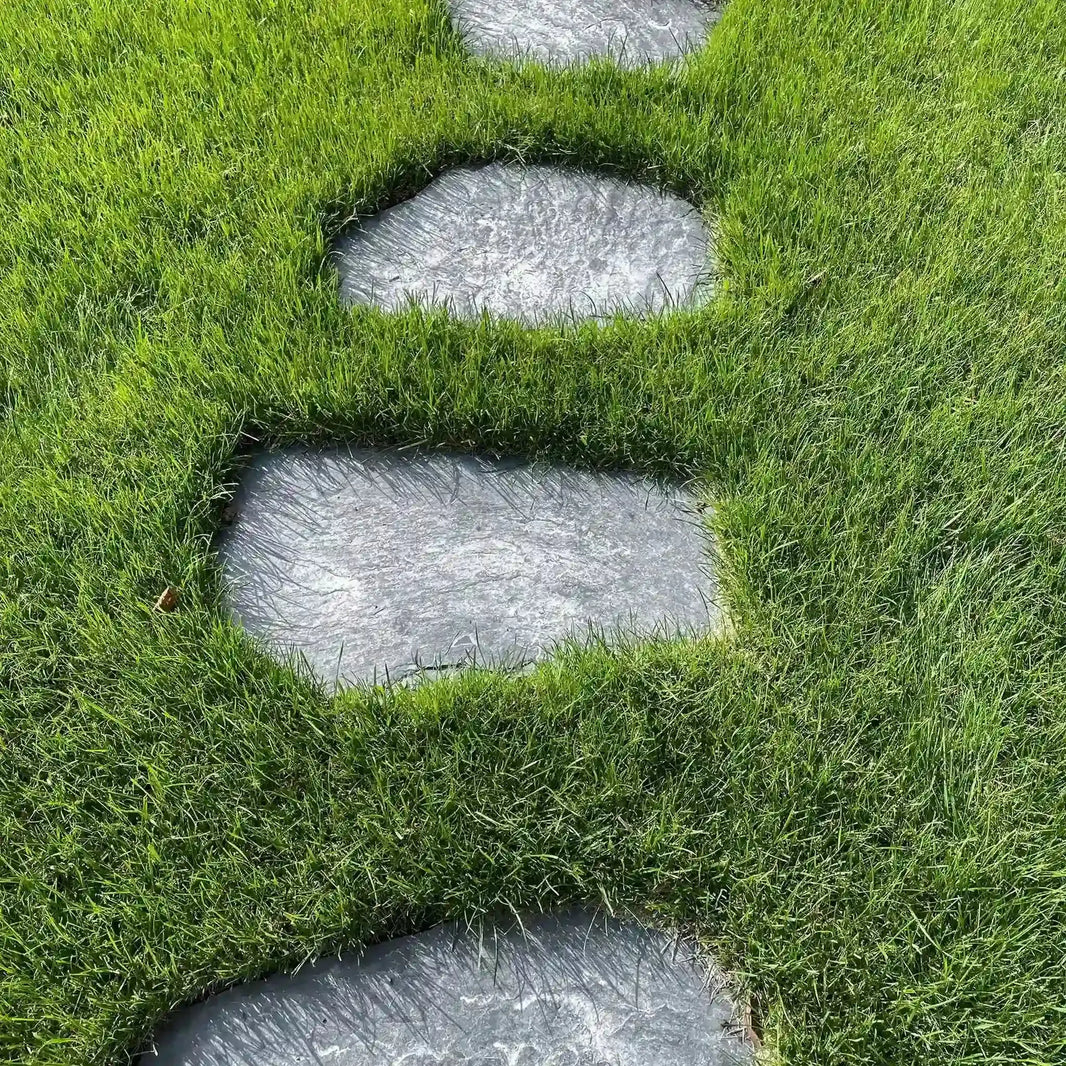
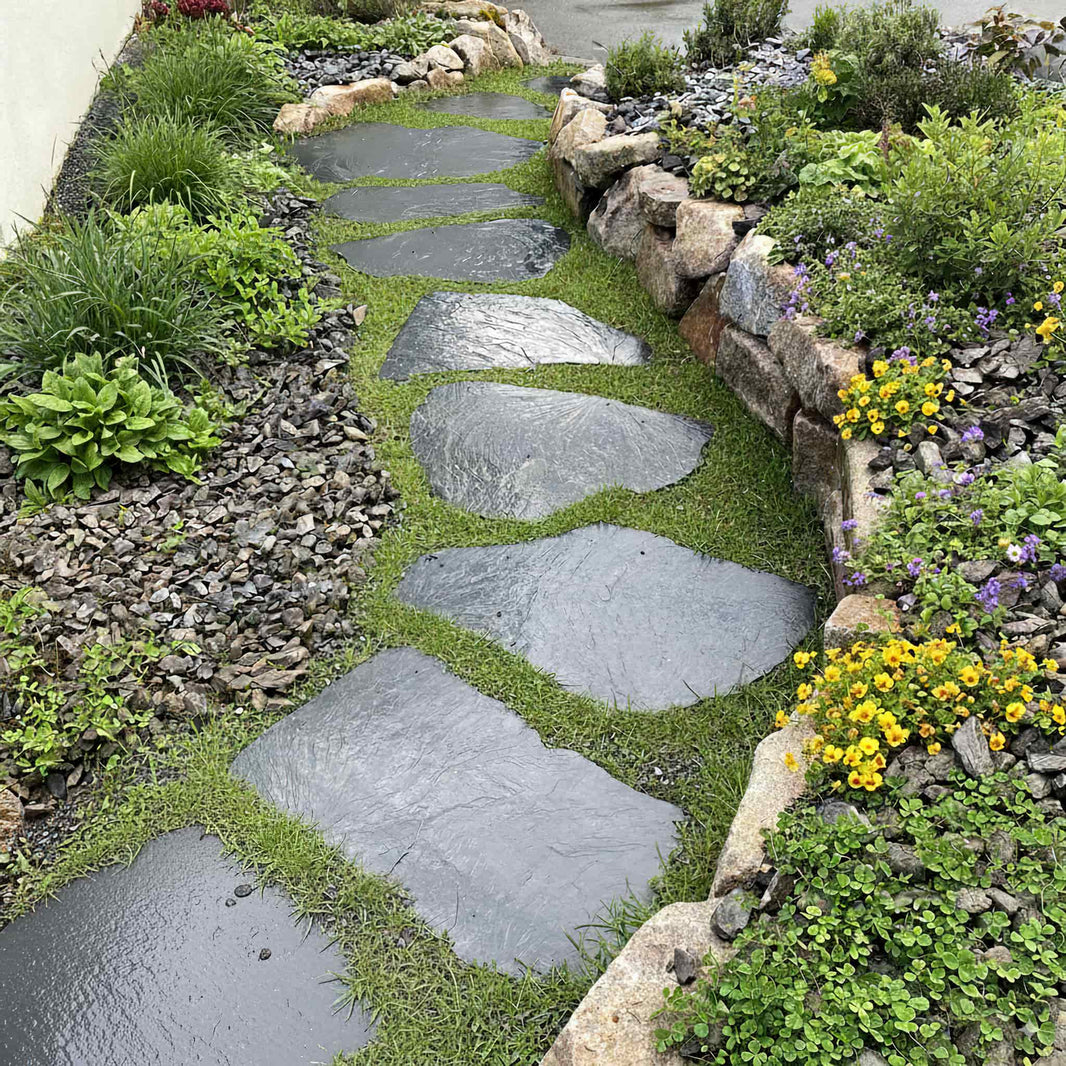
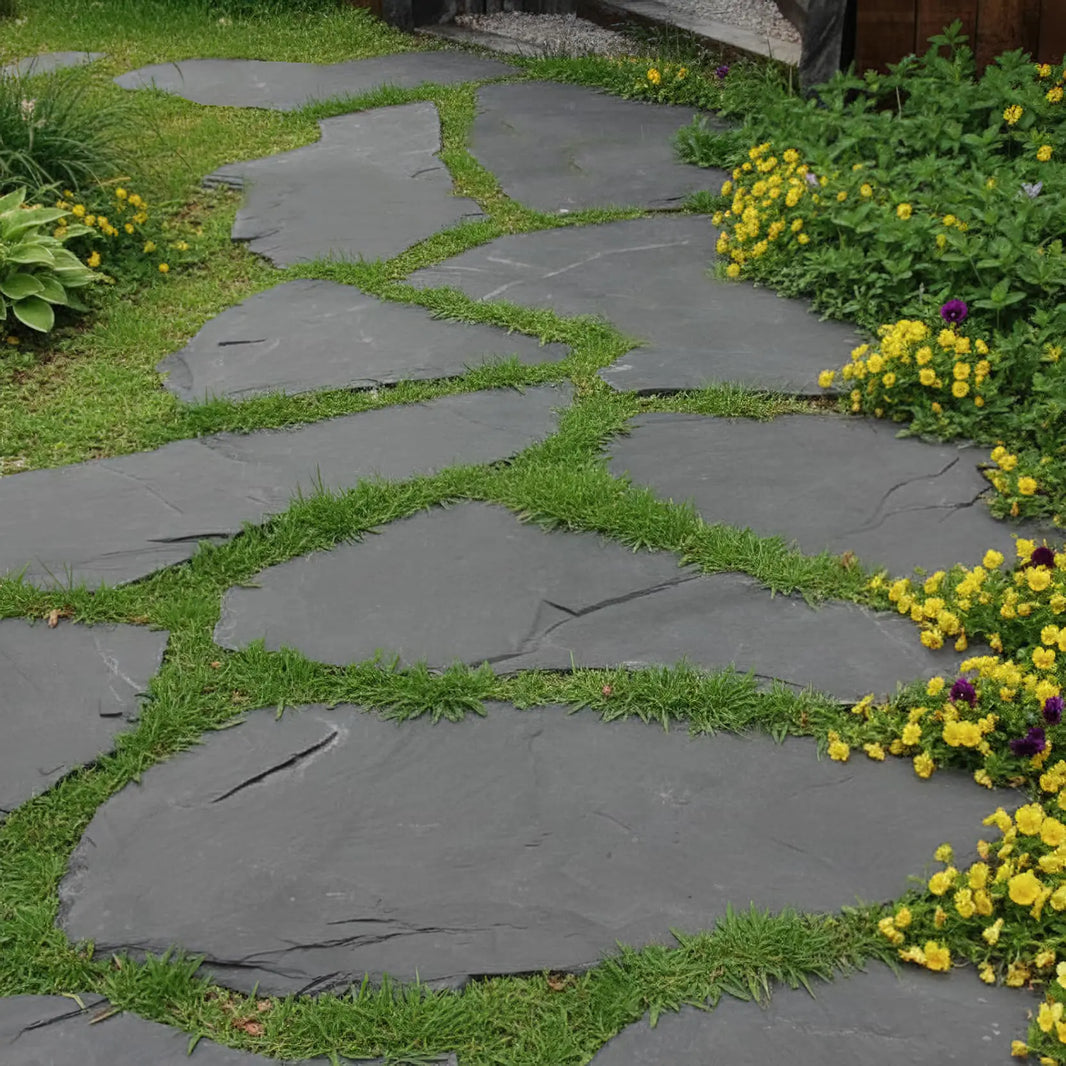
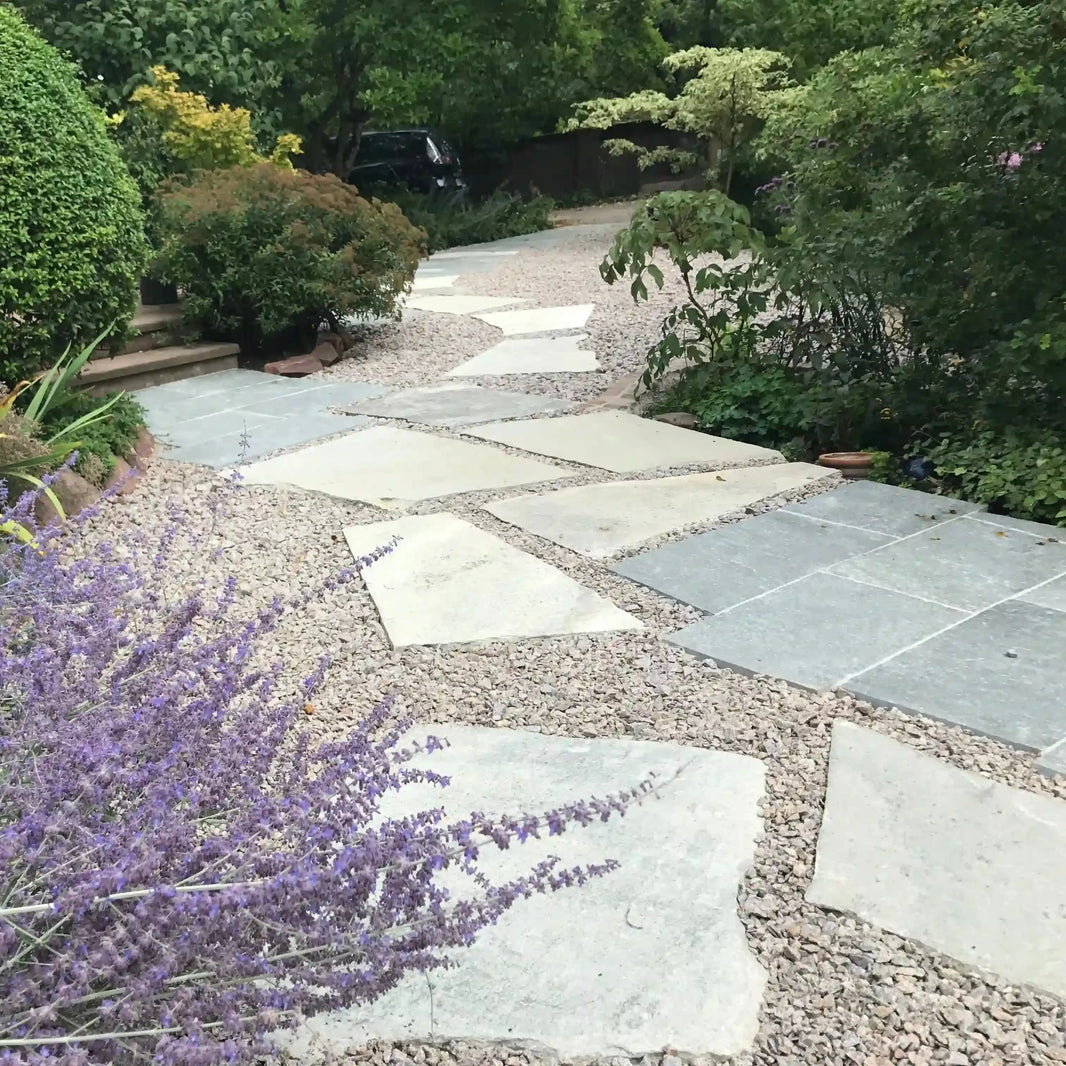
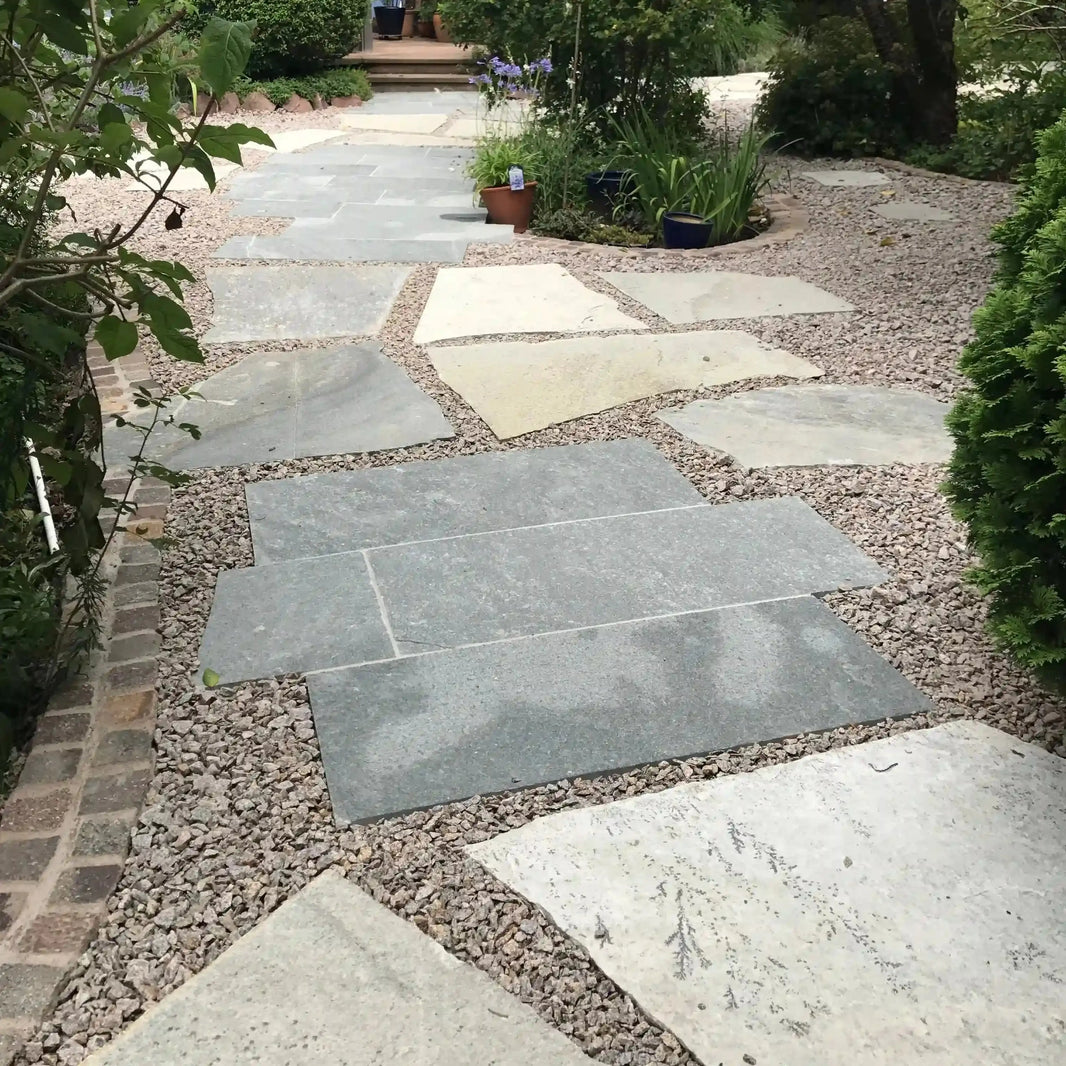
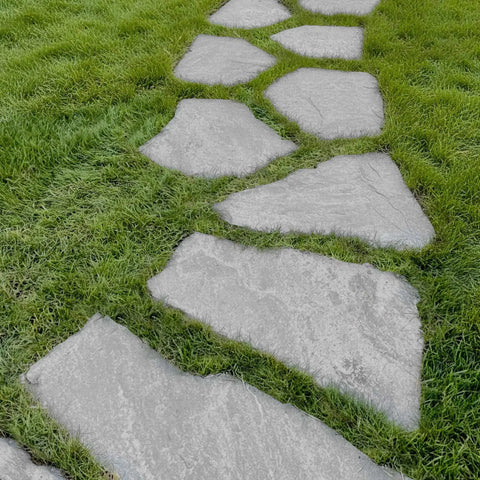
The irregular stepping stone can be laid in a lawn, in the middle of gravel or along a flower bed. It allows you to walk through the garden while preserving the planted areas. Natural stone also brings colour and texture nuances that vary from one piece to another. Depending on the style you want, you can choose a slate in grey or
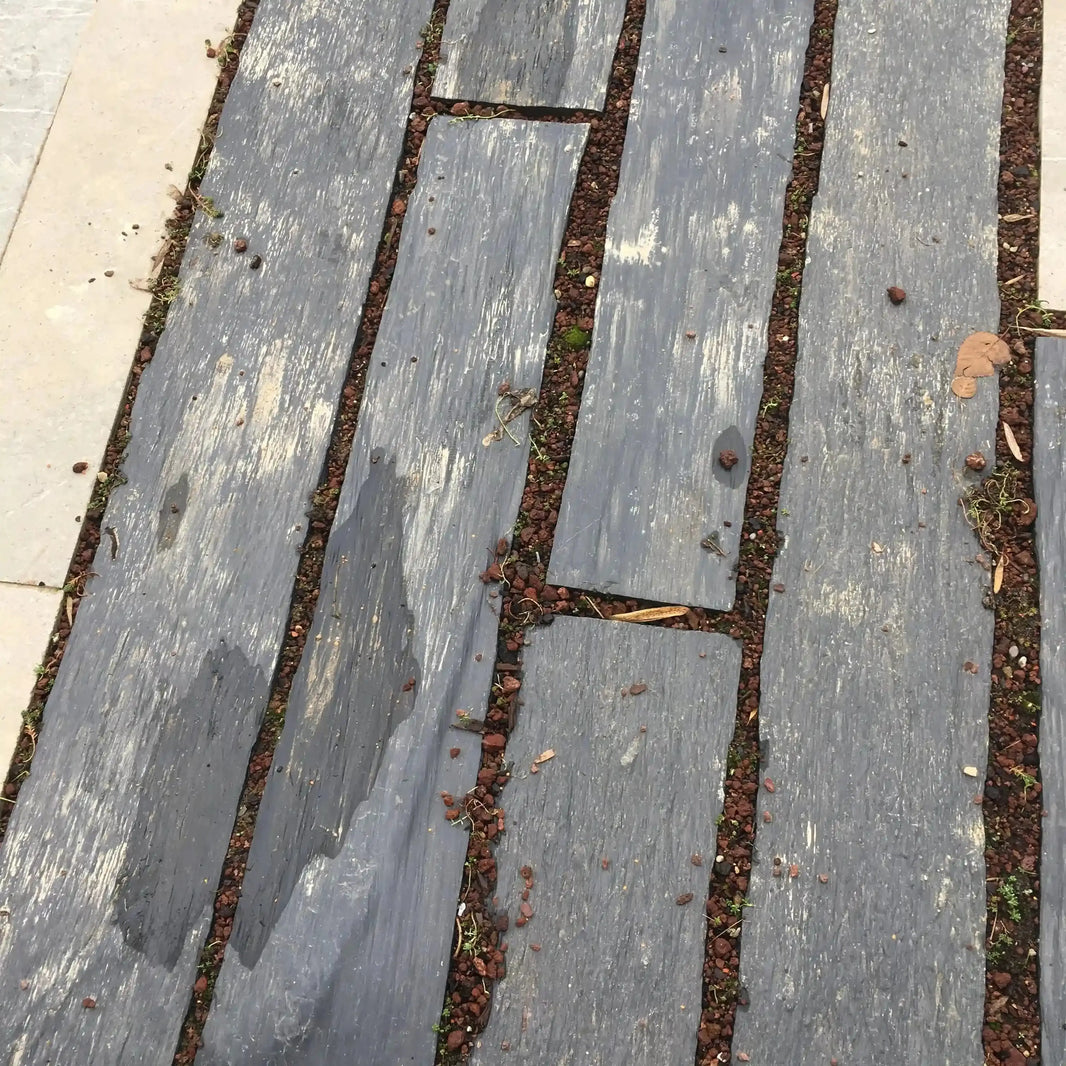
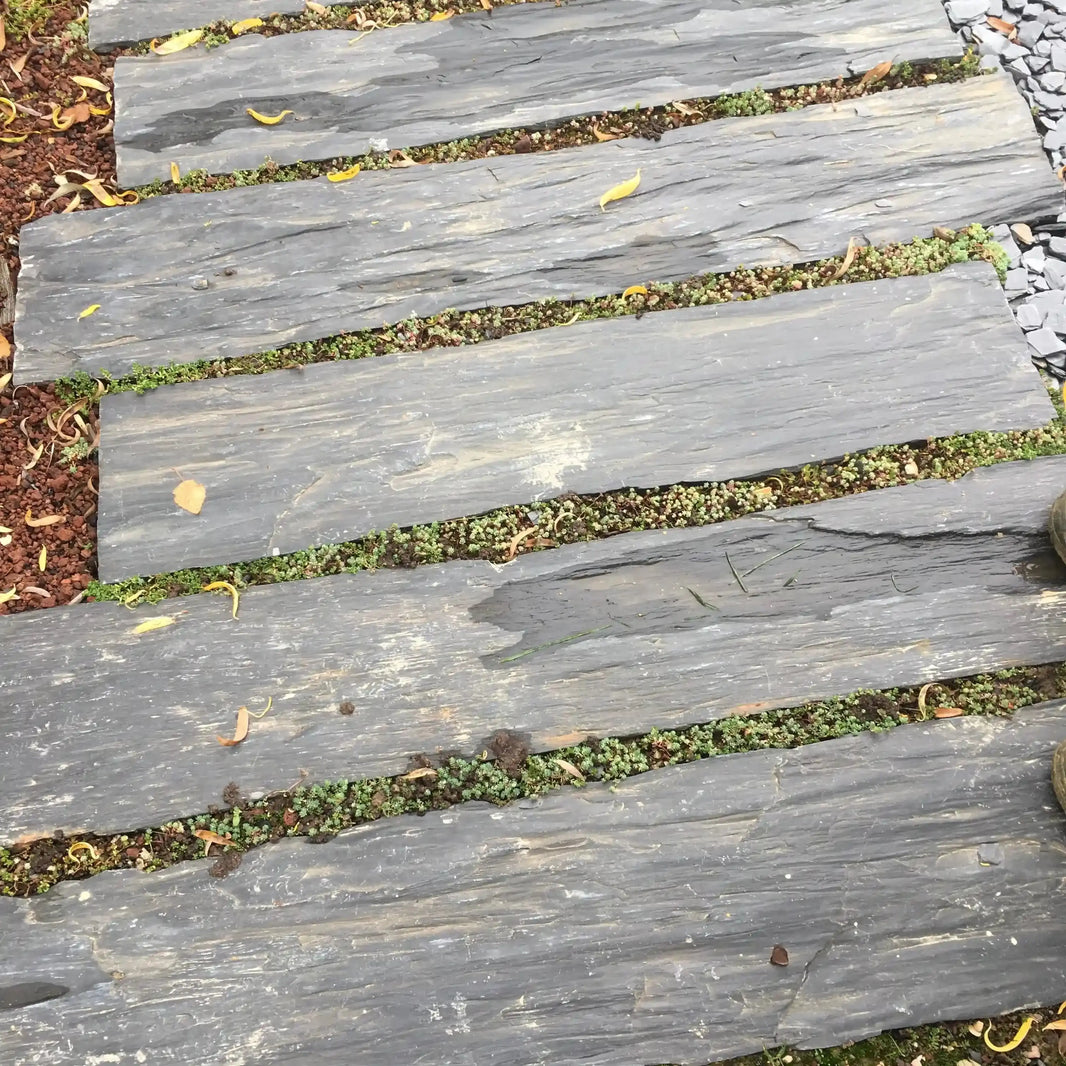
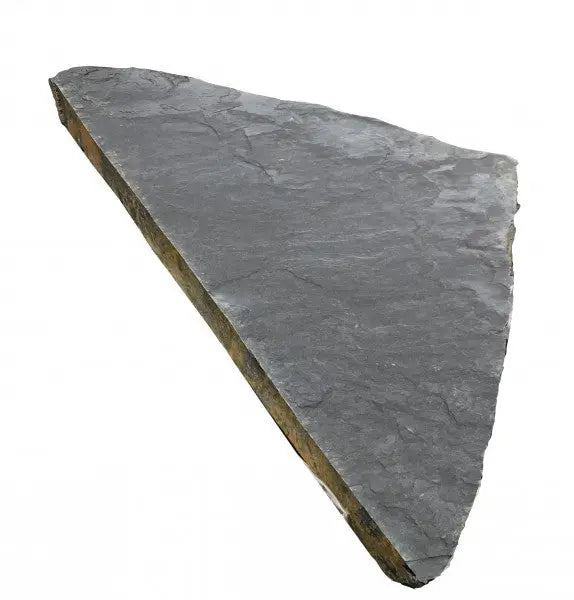
dark tones, a quartzite with mineral nuances or a more colourful stone. The irregular GALICIA SLATE stepping stone illustrates this type of natural shape, suited to creating an outdoor path.
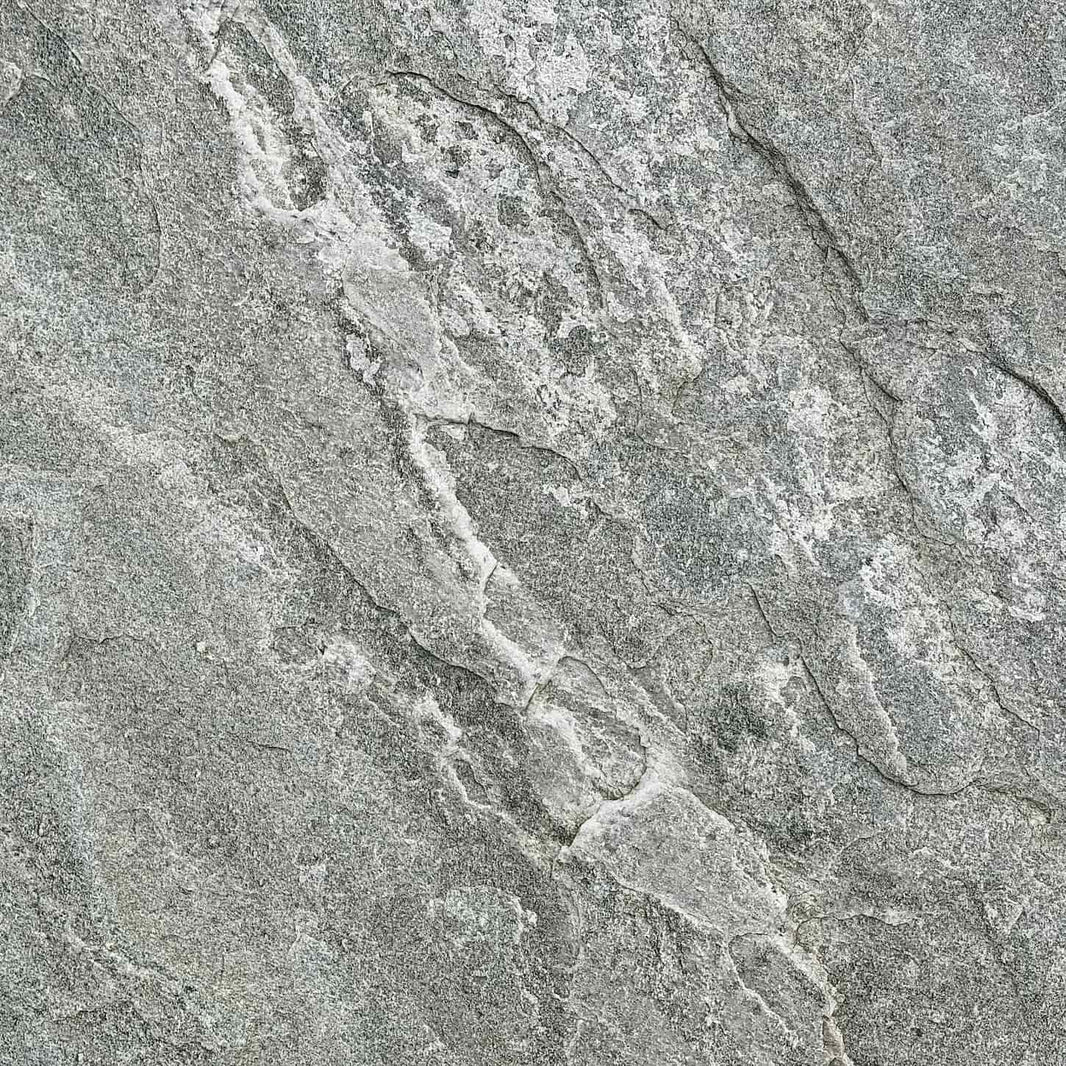
The material directly influences the appearance of the path, its texture and its integration into the garden. Slate is appreciated for its grey, black or nuanced shades and its layered look. It suits contemporary designs as well as more natural spaces. Quartzite, for its part, has mineral variations and a texture that enhance landscaped gardens.
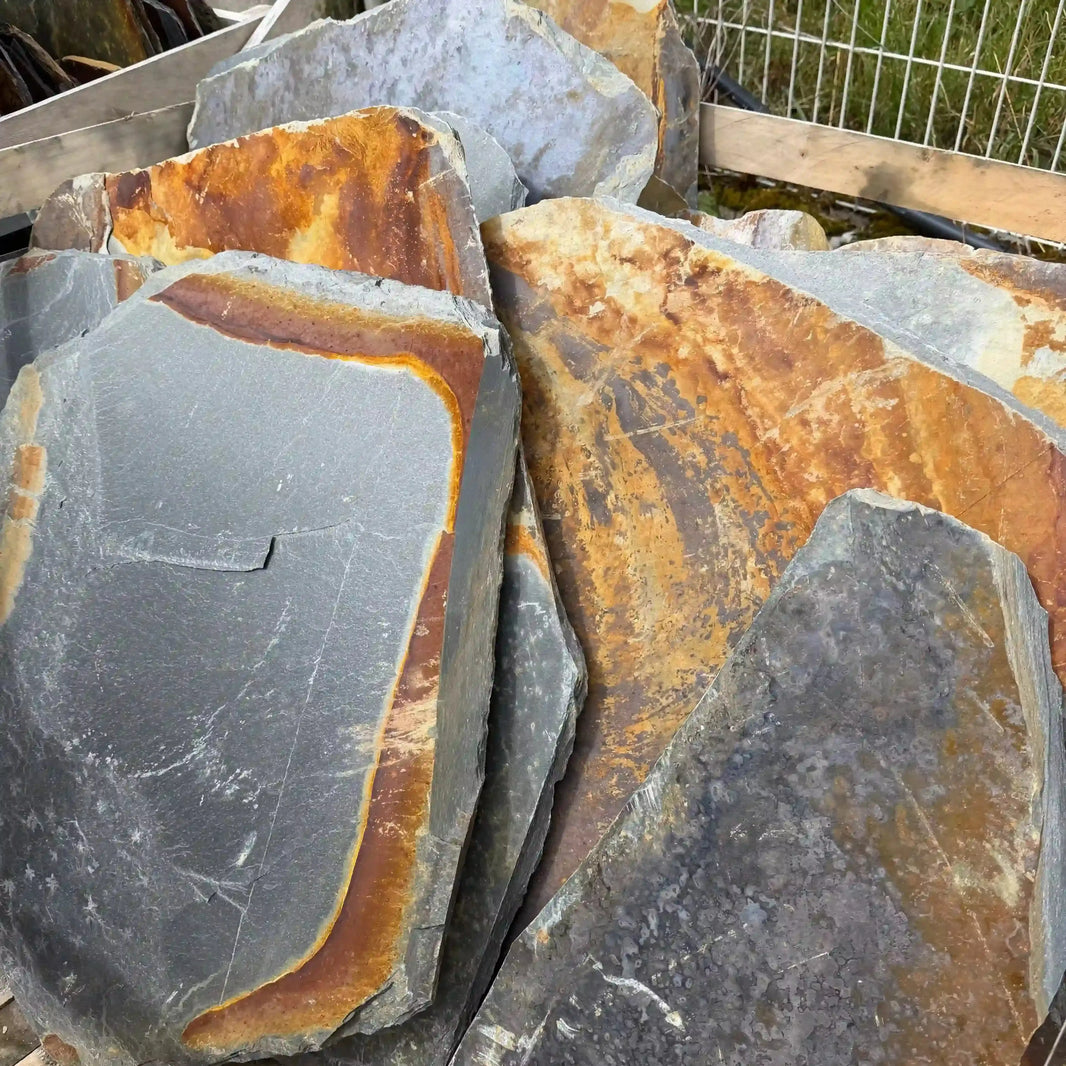
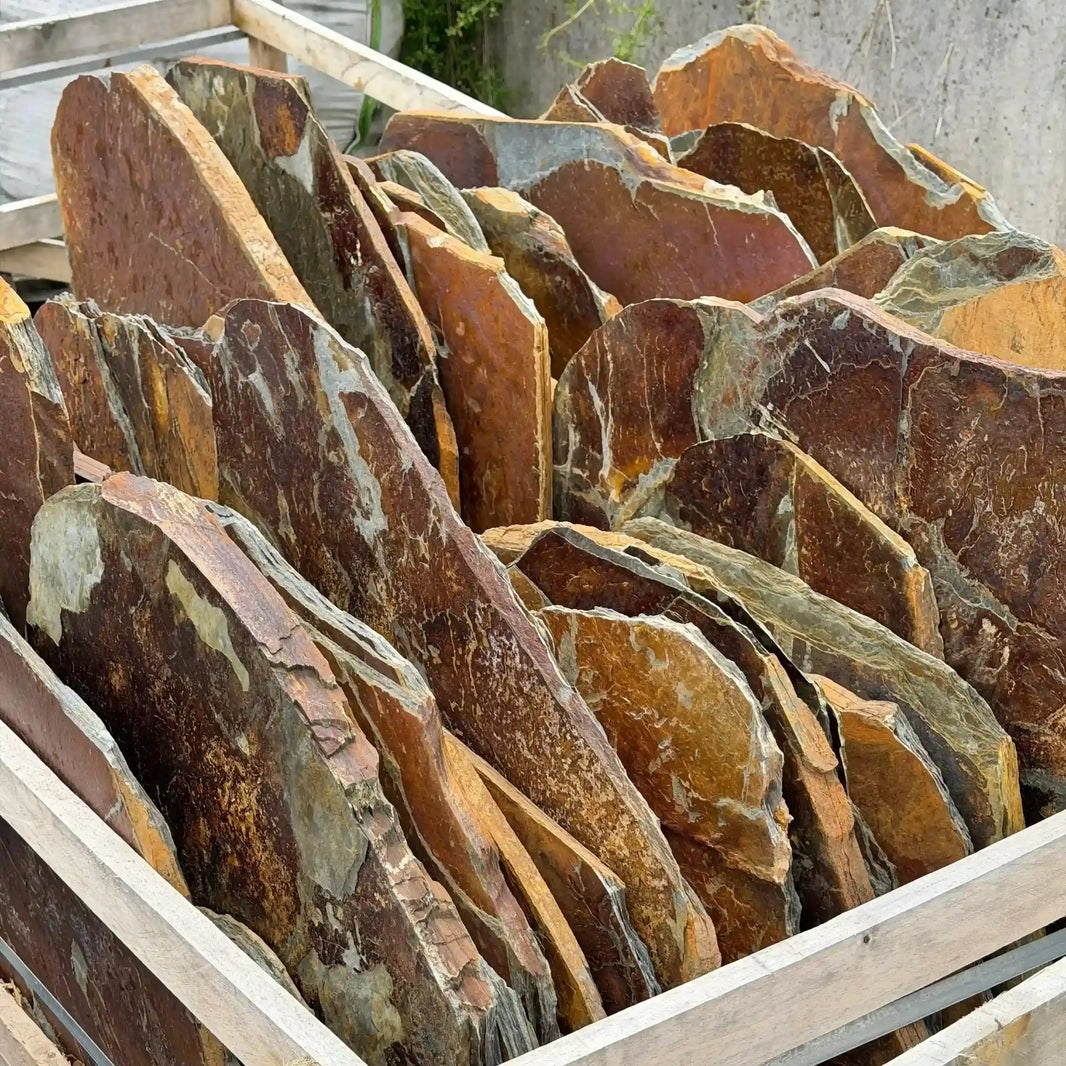
For a more colourful result, some stones show brown, ochre or rusty shades. They create a contrast with the lawn, gravel and plantings. The choice therefore depends on the desired atmosphere, but also on the colours already present around the house. Among the references offered, the MULTICOLOURED SLATE stepping stone brings variations in shade, while the QUARTZITE ADRIATICO stepping stone - natural shape offers a more understated mineral look. Comparing the photos and characteristics of the products makes it easier to visualise the result.
Irregularly shaped slabs find their place in many outdoor spaces. They make it possible to lay out a path across a lawn, to connect a terrace to a relaxation corner or to ease access to a vegetable garden. Their natural silhouette suits modern gardens as well as more rustic spaces.
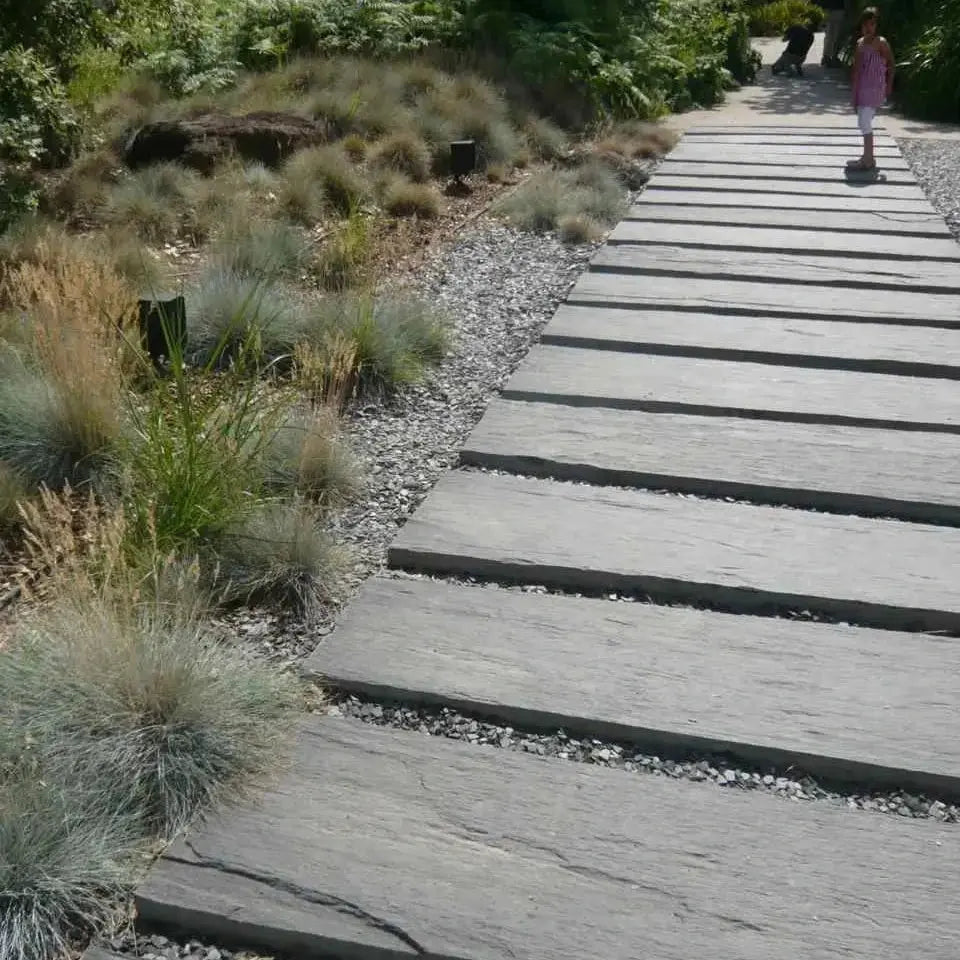
In a landscaped garden, you can place the stones in the middle of the lawn to create a discreet path. On a bed of gravel, they add relief and structure the circulation. They can also accompany plantings, run along a border or guide footsteps toward an entrance.
For a path with a mineral look, the Irregular ARDOISE DE GALICE stepping stone has raw contours and a natural finish. It is offered in a diameter of 50 to 70 cm. Before choosing your stones, think about the use of the passage, the frequency of traffic and the space available. These elements will help you define the width of the path and the spacing between each slab.
Installation depends on the terrain, the frequency of use and the desired effect. For a path across the lawn, start by laying the stones out dry to determine their position. Then walk along the route to check that the distances between the slabs are comfortable and suited to your stride.
Once the positioning is set, cut the turf around each stone and excavate the ground slightly. Prepare a stable, sufficiently level base, then install the slabs making sure they do not tilt. Their surface must remain consistent with the ground level to limit the risk of tripping.
Irregular shapes sometimes show differences in size and thickness. It is therefore useful to take the time to adjust each piece. For some products, installation with wider joints may be recommended to compensate for the variations. Always consult the technical information of the chosen reference and adapt the preparation of the base to the nature of your ground.
The size of the slabs plays an important role in walking comfort and the visual balance of the path. Generously sized stones make it possible to create a clearly visible path, while smaller formats fit easily into a narrow space or a garden with dense planting.
When choosing, take into account the width of the passage, the distance between the stones and the area to be landscaped. A main path, used daily, generally calls for slabs large enough to provide comfortable footing. For a secondary or decorative path, you can play more with shapes and spacing.
Irregular natural stone stepping stones vary in length, width and sometimes thickness. It is therefore preferable to allow a margin when calculating the number of pieces needed. The collection offers different dimensions and thicknesses depending on the materials, including formats between 30 and 60 cm, between 60 and 80 cm or larger than 80 cm.
Also take into account the weight of the stones to anticipate their handling and installation.
The maintenance of stepping stones depends mainly on the material and its finish. Regular cleaning removes leaves, soil and deposits that can build up over the seasons. In most cases, a broom, water and a mild cleaner suited to the stone are enough to keep a good appearance.
Avoid acidic or overly aggressive products, which risk damaging certain natural stones. It is also preferable not to use an overly powerful cleaning method without first checking its compatibility with the surface. Depending on the stone and its exposure, a protective product may be considered to limit the penetration of dirt.
Galician slate, for example, has low porosity and resists frost as well as climatic variations. Its product sheet states that no treatment is mandatory and that it requires little maintenance.
Exposure conditions remain important, however: in shaded and damp areas, watch for the appearance of moss and clean the slabs if necessary. Simple, regular maintenance helps preserve the look of your path over time.