Cladding Bricks
Add character to your walls with our natural terracotta facing brick, with warm red hues. Discover our collection for an authentic and timeless style.
-
Online exclusiveWall / Interior & ExteriorBROOKLYN Terracotta Cladding Brick + Corners
4.8 / 5.0
(5) 5 total reviews
Regular price From 74,90€ /sqmFrom 74,90€ /sqm Sale priceUnit price /sqm / per -
Online exclusiveFloor & Wall / InteriorSquare Terracotta Tile Cladding - Full-Body Handmade Terracotta
5.0 / 5.0
(5) 5 total reviews
Regular price 42,50€ /sqm42,50€ /sqm Sale priceUnit price /sqm / per -
Sold out Online ExclusiveFloor & Wall / IndoorTerracotta Tile Cladding 30x8 cm - Full-Body Handmade Terracotta
5.0 / 5.0
(12) 12 total reviews
Regular price 42,50€ /sqm42,50€ /sqm Sale priceUnit price /sqm / per -
Sold out Online exclusiveFloor & Wall / InteriorHexagonal Terracotta Tile Cladding 16x16 cm - Full-Body Handmade Terracotta
5.0 / 5.0
(4) 4 total reviews
Regular price 42,50€ /sqm42,50€ /sqm Sale priceUnit price /sqm / per -
Sold out Online exclusiveFloor & Wall / Interior
Terracotta Tile Cladding 30x15 cm - Full-Body Handmade Terracotta
4.83 / 5.0
(6) 6 total reviews
Regular price 42,50€ /sqm42,50€ /sqm Sale priceUnit price /sqm / per
ALL ABOUT CLAY FACING BRICKS
Add character and authenticity to your walls with facing brick. Hand-crafted from natural terracotta, it offers a nuanced red finish with warm tones, perfect for an industrial, rustic, or contemporary style. Suitable for both indoor and outdoor use, it is easy to install thanks to its sawn back and matching corner pieces. Discover our complete range and enjoy fast delivery.
A cladding brick is a decorative wall element, often made of terracotta, used to create an aesthetic covering on interior or exterior walls. Unlike a traditional brick used in construction, it has no load-bearing role. It is a thin brick slip, generally about 2 cm thick, that is glued directly onto a façade, a kitchen wall, or a living room partition to give it an authentic wall look.
Its purpose is purely aesthetic : imitating old brick cladding while being easier to install. It allows you to recreate the warm atmosphere of a New York loft, a renovated farmhouse or a terracotta façade typical of the south.
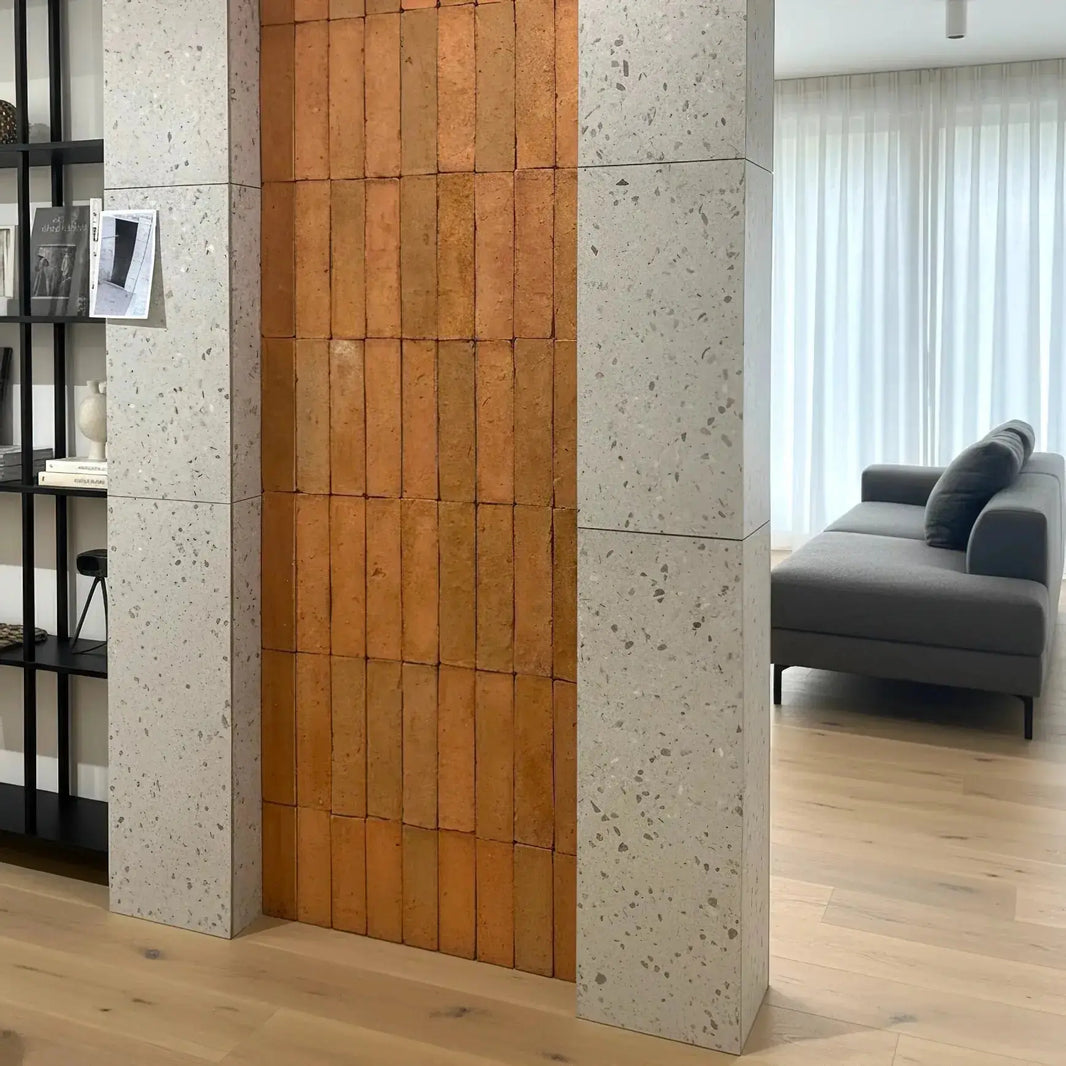
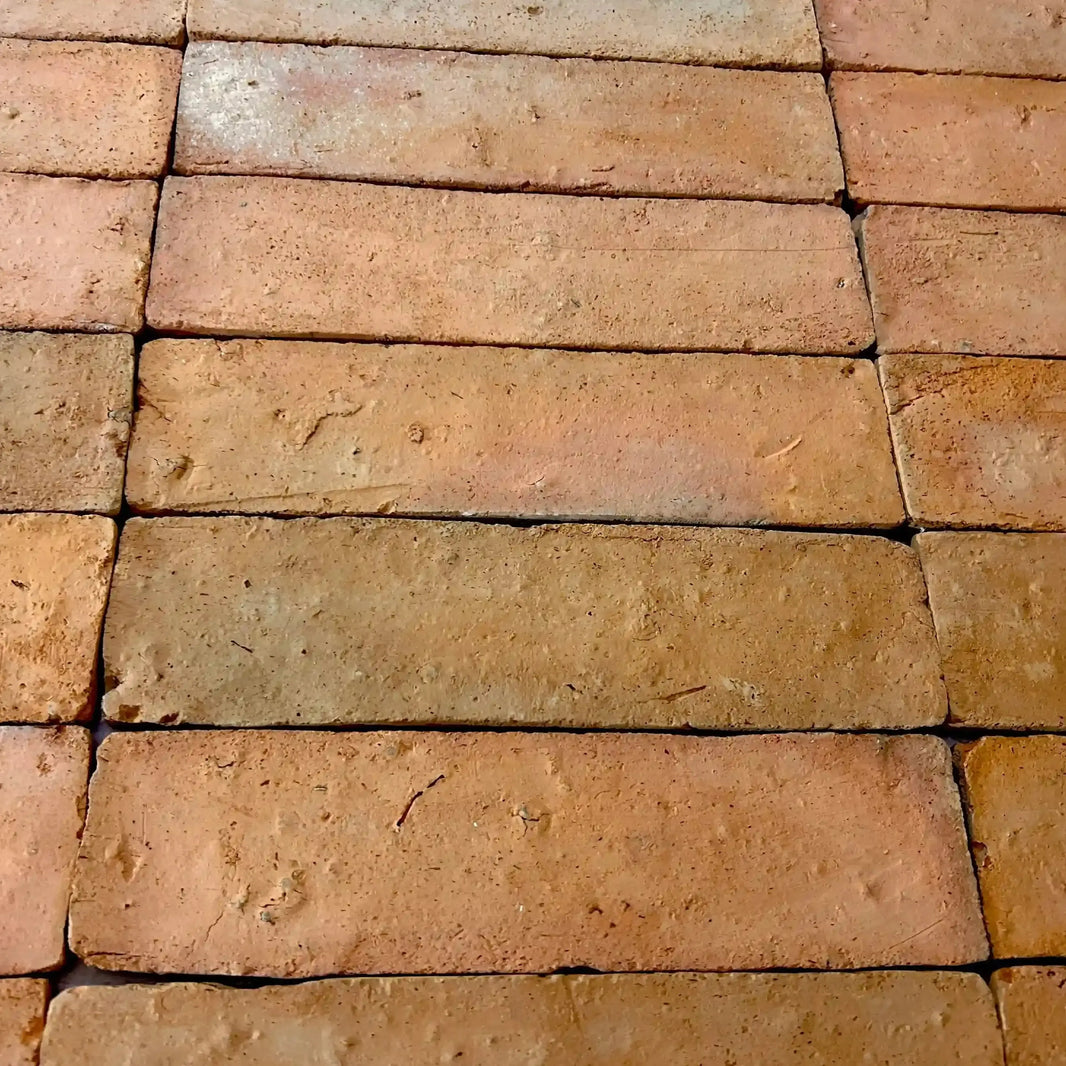
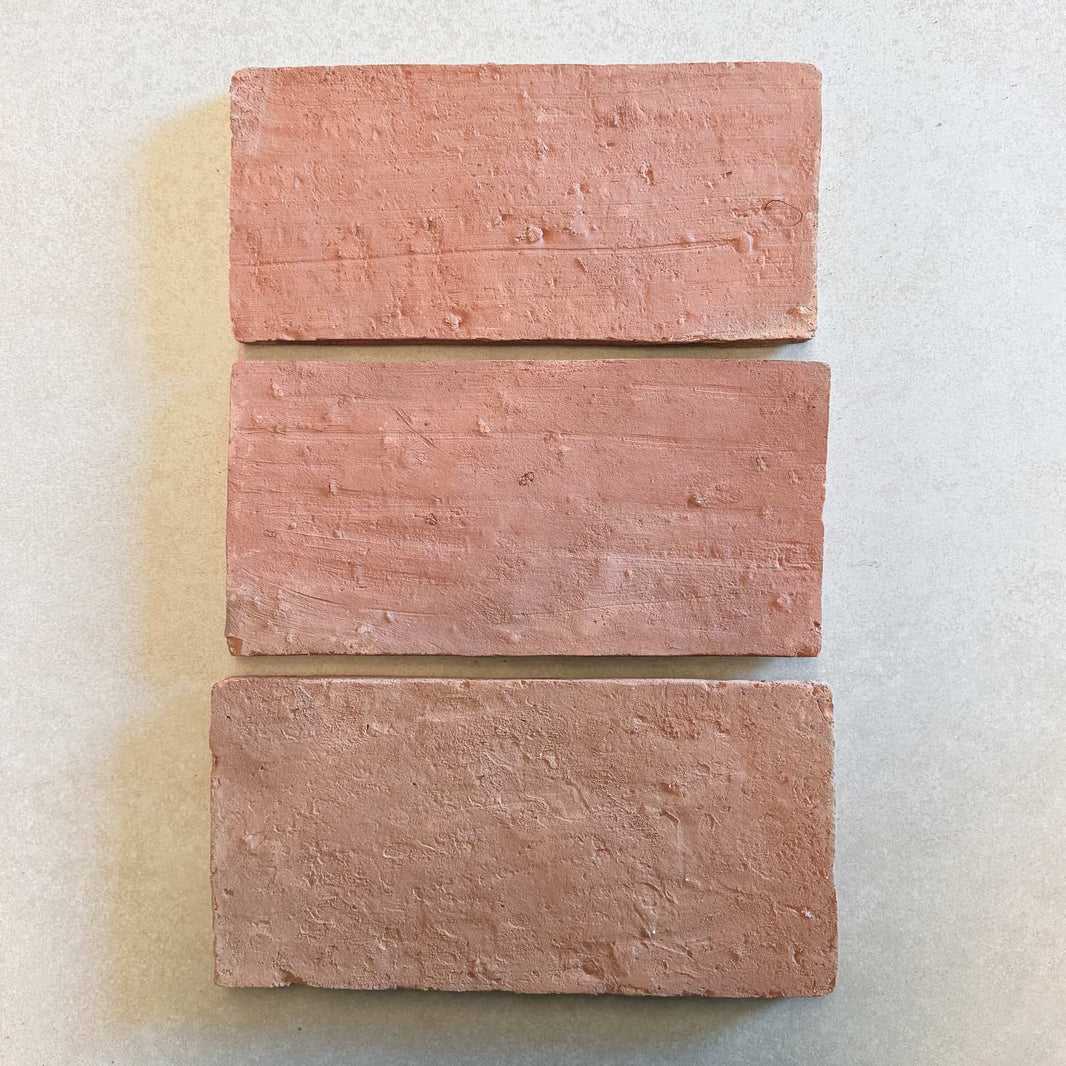
At Minéral, our flagship product is the BROOKLYN brick, a red brick slip in terracotta, handmade, with irregular edges and an aged texture. It offers a highly sought-after raw look, with red, brown or grey shades that suit all interior styles.
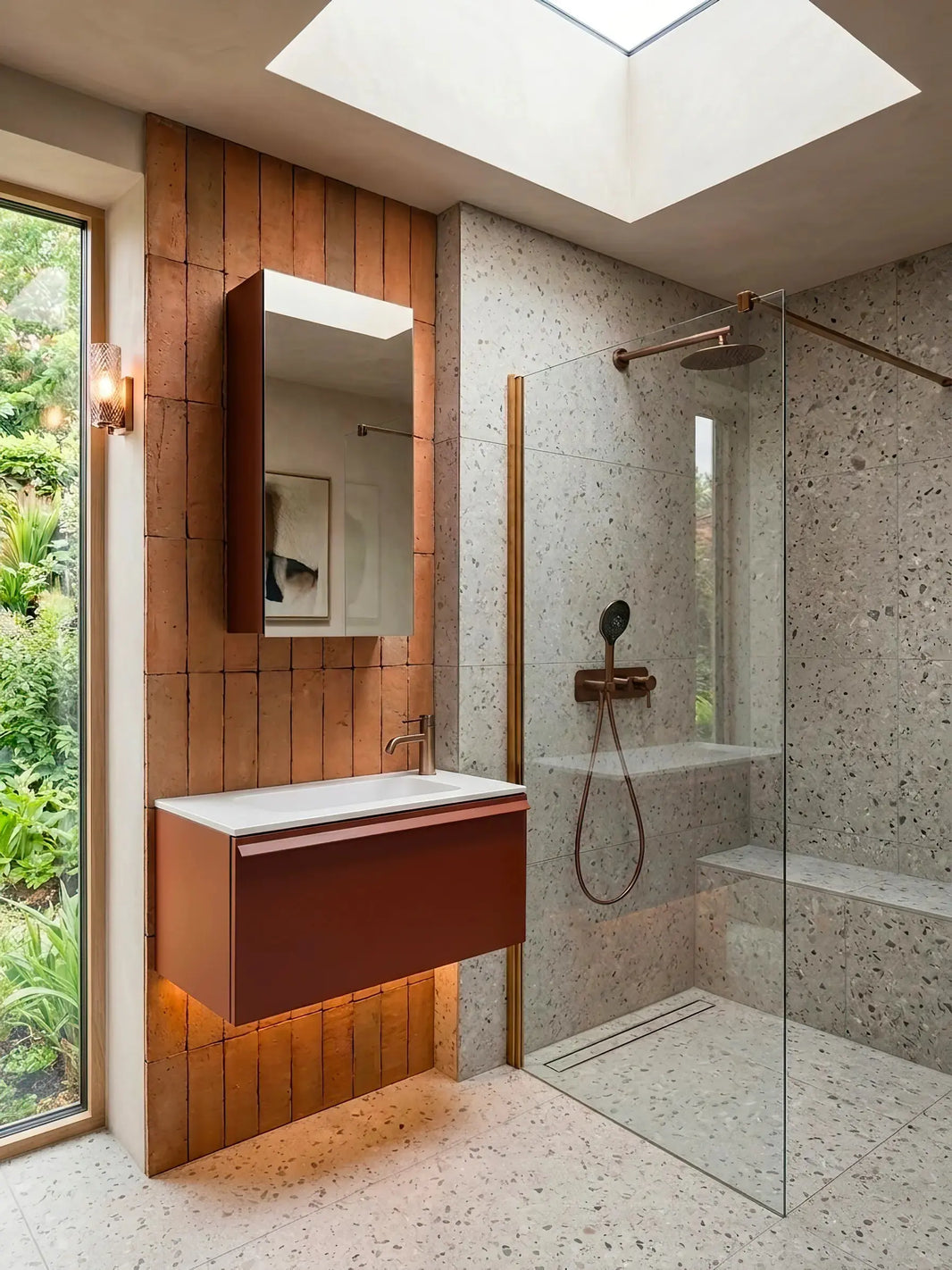
Easy to install thanks to its sawn back, the cladding brick is fitted with a suitable adhesive and is grouted like a real brick. It can also be protected with a water repellent to make maintenance easier over time, particularly in a damp area such as a bathroom or around a stove.
In short, the cladding brick is a trendy decorative solution, durable, and available in many formats, colours and materials, ideal for bringing character to your walls, whether interior or exterior.
The difference between a facing brick and a cladding strip lies mainly in the material, thickness, shape and end use.
The facing brick, like our BROOKLYN model, is generally made of terracotta, with a thickness of about 2.2 cm. This product is molded, fired at high temperature, and often offered with corner pieces to allow continuous installation on walls and facades. Its raw, textured look, its red shades tinged with brown, and its aged effect give it an authentic aesthetic, close to that of old brick buildings.
In contrast, the cladding strip is a thin decorative finish, often made of natural stone, reconstituted stone, or even concrete. Thinner (often 1 to 1.5 cm thick), it is also lighter. It is perfect for indoor projects (kitchen wall, living room, headboard…), where you want a decorative wall covering without excess weight. However, strips are rarely offered with corner panels, which can limit their use on facades or protruding walls.
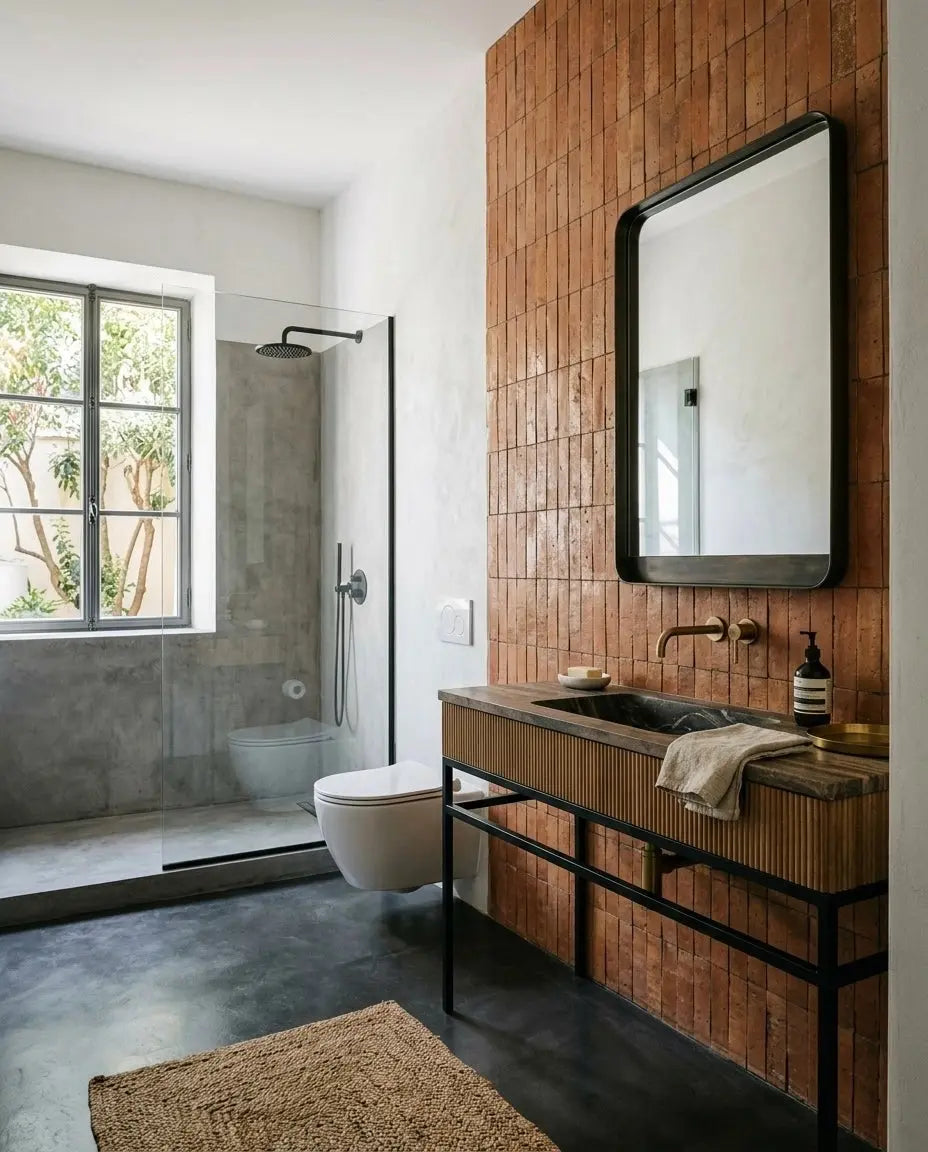
The facing bricks are now at the heart of decor trends, as much for their raw aesthetic as for their versatility. Inspired by industrial walls or country houses, they instantly bring character and texture to any interior wall.
In the kitchen, brick often appears behind a stove, as a backsplash or on a central island wall. Its heat resistance, especially when made of terracotta, makes it a wall covering that is both decorative and practical. It pairs perfectly with materials such as wood, black glass or natural stone for a warm and trendy look.
In a living room or an office, it is used to create an accent wall that evokes the New York loft style. Red brick cladding, with an aged look or sandblasted, goes very well with modern furniture, metal shelves or decor accessories in leather or linen. This blend of old and new is highly sought after in interior design projects.
In a bedroom, facing brick also finds its place as a headboard wall. Its natural look, its nuanced red shade or its terracotta tones, make it possible to structure the space without weighing it down, while keeping a soft and mineral atmosphere. Paired with minimalist decor, it brings a real focal point to the room.
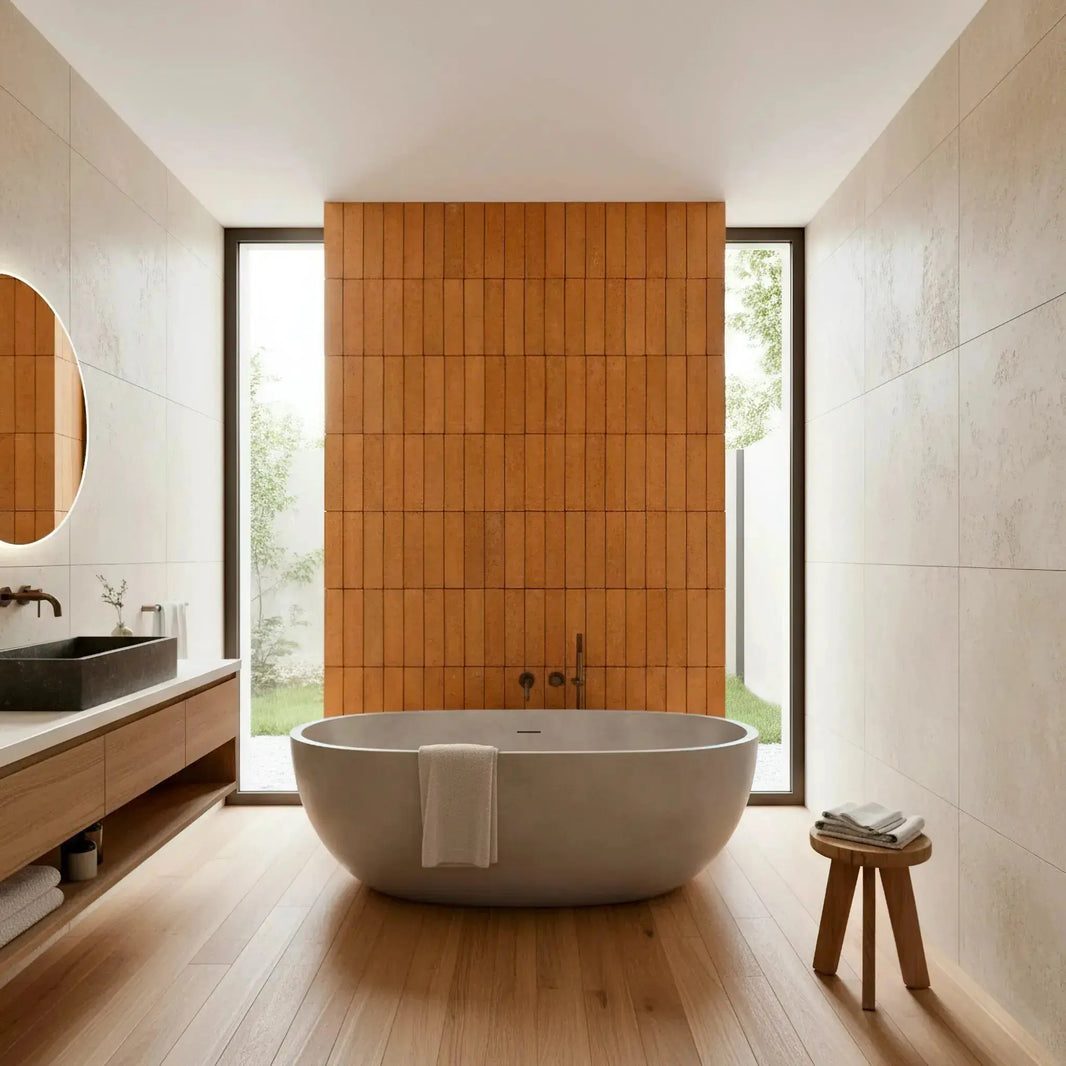
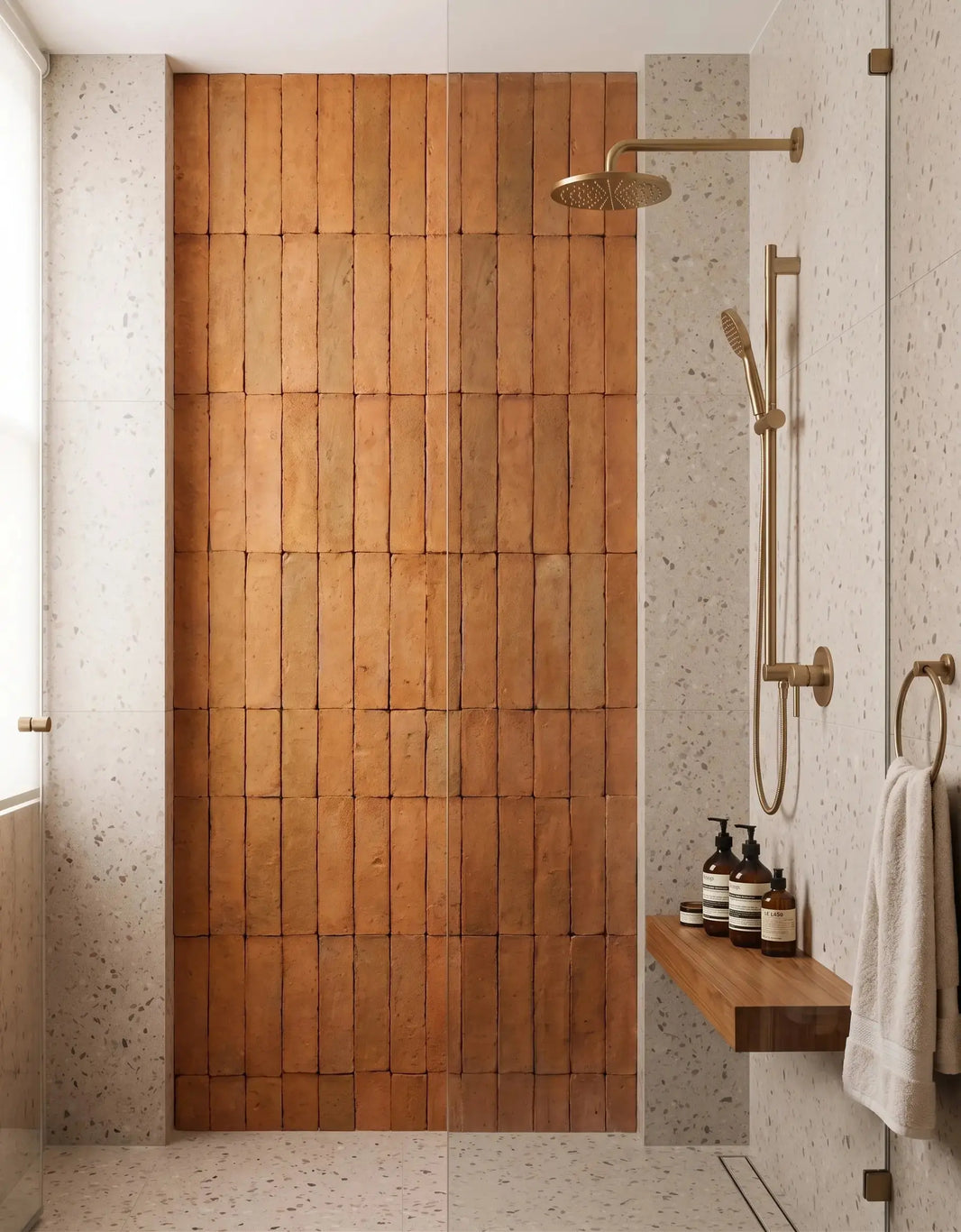
The current trends favor the combination of brick with white tones, sand, grey, or even light wood, for a raw-chic effect. Some projects mix brick with polished concrete, wall tiles, or a stone-effect covering, to create an urban, industrial or rustic style.
Thanks to the many textures and available shades, facing bricks suit all interior spaces, from the kitchen to the living room, including the office or the bathroom.
While facing bricks appeal through their authentic charm and warm aesthetic, they also have a few drawbacks to be aware of before starting a project.
The first concerns their weight: a solid facing brick in terracotta weighs approximately 30.5 kg/m², which requires a solid wall substrate in good condition. This constraint rules out lightweight surfaces (hollow partitions, unreinforced plasterboard) or requires a specific preparation before installation.
Second point: color variations. Because they are often handmade from natural materials such as clay, bricks show slight color nuances (red, brown, grey-yellow…) from one batch to another, or even within the same box. This is what gives them all their character, but it needs to be anticipated during installation. We recommend mixing the brick slips from several boxes and allowing for wide grout joints (minimum 1 cm) to maintain visual homogeneity.
Third point: the price. Compared with a thinner facing slip (in reconstituted stone, concrete, or ceramic), the real brick is more expensive to buy and to install. It is also thicker (generally 2.2 cm), which can be a problem in small rooms or on walls with little margin for added thickness.
Finally, installing corners can be an additional difficulty. Fortunately, some models such as our BROOKLYN brick are available with matching corner pieces, making it easier to clad edges for a professional finish.
The installation of cladding brick slips requires a minimum of preparation to guarantee a durable and attractive result. Start by checking that your wall is clean, dry and sound. For fixing, use a suitable tile adhesive, such as KTF 55 adhesive recommended for terracotta bricks, which ensures excellent adhesion. Installation is done slip by slip, respecting a minimum grout joint of 1 cm to compensate for the variations in colour and natural textures of the material. For corners, favour the specific corner pieces that guarantee perfect visual continuity on the corners and avoid complicated cuts.
As for tools, it is important to have a notched trowel, a spirit level for perfect alignment, and a damp sponge to clean the excess grout. After installation, let it dry for 24 to 48 hours before grouting with a grout mortar such as Joint SF 50, specially formulated for this type of wall material.
For everyday maintenance, a simple dusting or wipe with a damp sponge is enough. For more stubborn dirt, the use of a post-construction cleaner such as Lithofin multi-cleaner is recommended. To preserve the brick and protect it from moisture, a waterproofing treatment with a product such as Lithofin protection W is advisable, particularly outdoors or in areas with high humidity (kitchen, bathroom).
Thanks to these installation and maintenance tips, your cladding brick will keep all its charm and sturdiness, providing a wall covering that is at once attractive, natural and durable.